
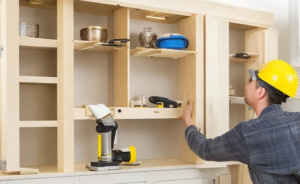
Installing cabinets, particularly upper units, presents physical challenges that can make even a straightforward project feel unnecessarily difficult and risky. Holding heavy cabinets in place while securing them often requires more hands and strength than a single person can safely provide. Exploring tools designed to simplify this process reveals practical solutions that improve both safety and efficiency. Exploring these tools further reveals practical solutions for common installation challenges.
Why Cabinet Installation Presents Unique Challenges
Upper cabinets are often heavy and awkward to maneuver, particularly when working alone or in tight spaces during a renovation. Holding a cabinet steady while simultaneously securing it to a wall increases the risk of dropped items or personal injury. Precise alignment also becomes difficult without a stable, reliable way to hold cabinets in position during installation. Recognizing these challenges helps explain why specialized tools have become so valuable for this type of project. Recognizing these challenges helps explain the growing popularity of specialized tools.
How a Cabinet Lift Improves Safety and Accuracy
Using a cabinet lift allows installers to raise and hold cabinets securely in place without relying on physical strength alone throughout the process. This stability significantly reduces the risk of dropped cabinets or injury during what can otherwise be an awkward, physically demanding task. The tool also allows for precise height and angle adjustments, supporting more accurate alignment during installation. These combined benefits make this tool valuable for both professionals and dedicated do-it-yourself homeowners. These combined benefits make this tool valuable for many different users.
Comparing Manual Installation to Using Specialized Tools
Manual installation typically requires at least two people to hold and align cabinets safely during the securing process. This approach increases both the time required and the physical strain involved compared to using a dedicated lifting tool. Specialized tools allow a single person to manage much of the process independently, improving both efficiency and safety. Comparing these approaches highlights why many installers now prefer tool-assisted methods for larger projects. This comparison highlights why many installers now prefer tool-assisted methods.
Types of Projects That Benefit Most From This Tool
Kitchen renovations involving multiple upper cabinets benefit significantly from the consistency and safety this tool provides throughout the project. Garage or workshop cabinet installations, often involving heavier or larger units, also see meaningful efficiency improvements. Projects requiring precise alignment across multiple connected cabinets particularly benefit from the stability this equipment offers. Recognizing these applications helps determine whether this tool makes sense for a specific project.
Tips for Getting the Most Out of This Equipment
Reading manufacturer instructions thoroughly before use ensures the tool is operated safely and as intended for a specific project. Practicing basic operation on a lighter test piece before working with actual cabinets helps build confidence and familiarity. Combining this tool with proper measuring and leveling techniques maximizes overall installation accuracy. These simple practices help ensure a smoother, safer installation experience from start to finish.
Conclusion
Cabinet installation does not have to involve unnecessary risk or frustration when the right tools are part of the process. Using equipment designed specifically for this task improves both safety and precision throughout the project. With the right approach, even physically demanding installation projects become far more manageable and successful.