
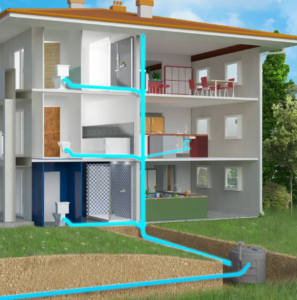
When managing large-scale infrastructure—such as shopping malls, sports arenas, industrial complexes, or luxury resorts—the scale of wastewater management shifts from a plumbing task to a major engineering feat. In these environments, the sheer volume of effluent, combined with the geographical spread of the facility, often makes traditional gravity-fed drainage impossible. This is where the implementation of professional-grade lifting stations becomes mandatory.
The Science of Lifting Stations
A lifting station (or sewage pumping station) is a centralized collection point for all wastewater generated within a facility. It typically consists of a large tank, internal sensors, and powerful submersible pumps. When the water level in the tank reaches a predetermined point, the pumps activate, macerating any solids and “lifting” the waste to a higher elevation or over a long horizontal distance to reach the municipal sewer main.
This technology is vital for any facility where the “black water” (from toilets) and “grey water” (from sinks and showers) are produced below the level of the street sewer. Without a robust lifting station system, basements in large malls or underground parking facilities would be unusable for commercial purposes.
Reliability in High-Pressure Environments
The primary concern for facility managers is downtime. A pump failure in a shopping mall on a busy Saturday is not just an inconvenience; it is a financial disaster and a public relations nightmare. Modern pumping stations solve this through redundancy. Most professional systems feature dual-motor setups. If one pump requires maintenance or becomes overwhelmed by a sudden surge in volume, the second motor automatically kicks in to handle the load.
Furthermore, advanced stations are equipped with smart monitoring. These systems can send real-time alerts to a central management office, indicating when a service is due or if an obstruction has been detected. By browsing the SFA Pumps official site, engineers can find stations capable of handling thousands of liters per hour, ensuring that even the largest facilities remain hygienic and operational.
Overcoming Topographical Challenges
Not all land is flat, and not all sewer lines are conveniently located. For industrial plants built on sloped terrain, lifting stations allow for the transport of waste across vast distances without the need for massive, deep-trench excavations. By utilizing high-pressure pumps, the wastewater can be moved through smaller pipes that follow the natural contours of the land, drastically reducing the initial cost of construction and the environmental impact of the project.